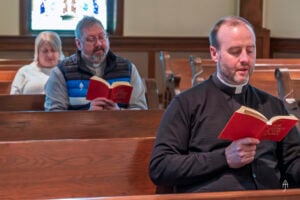
 One new thing I would like to introduce into our daily rhythm of parish life is the common prayer of the Liturgy of the Hours. After the Mass, this common prayer of praying together the Psalms and Canticles of the Bible ranks next in importance for community prayer.
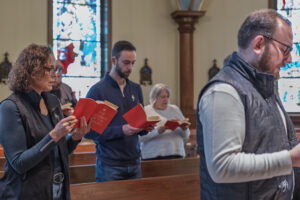
Starting on Thursday February 19th, the day after Ash Wednesday, our parish will be offering a common time to pray Evening Prayer (Vespers) at 5:15 pm on all weekday evenings of Lent in the Magnificat Chapel. This common prayer takes about 10-15 minutes, and will be led by a priest or deacon Monday to Friday throughout all of Lent. You may find this 5:15 pm a convenient time to make a short stop by the parish on your way home from work, during errands before supper, or some sacred time after the school day to join in communal prayer that is scriptural, formative, and grounding in the evening.
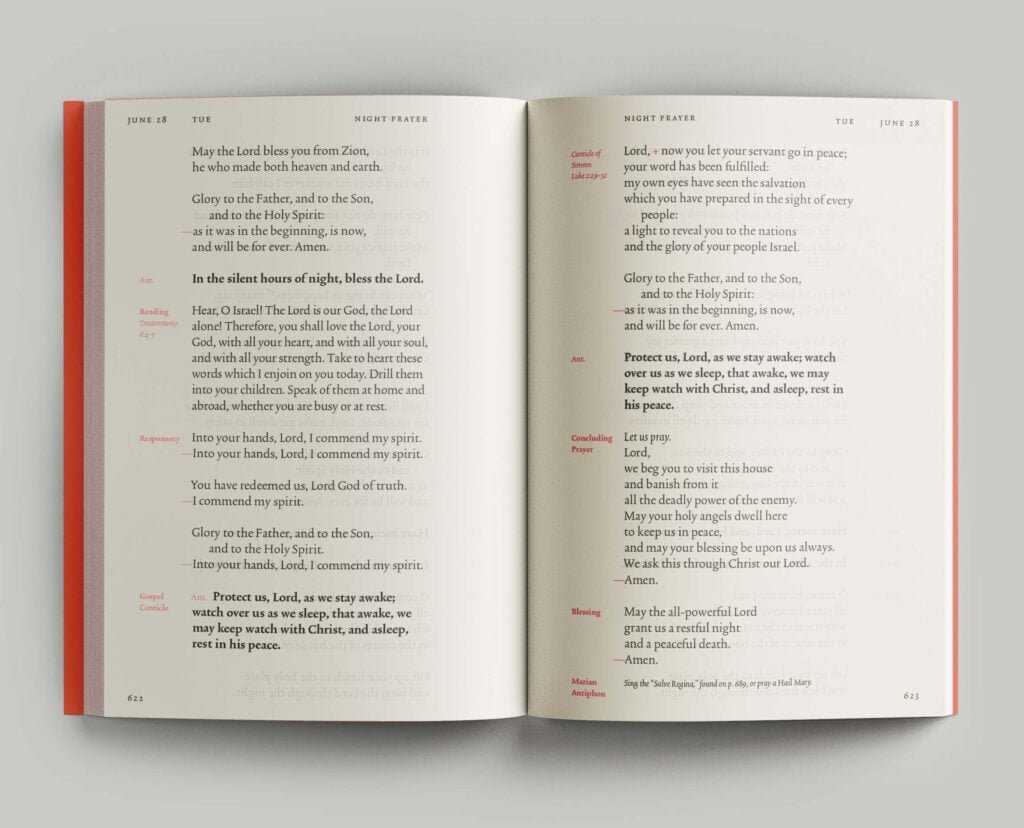
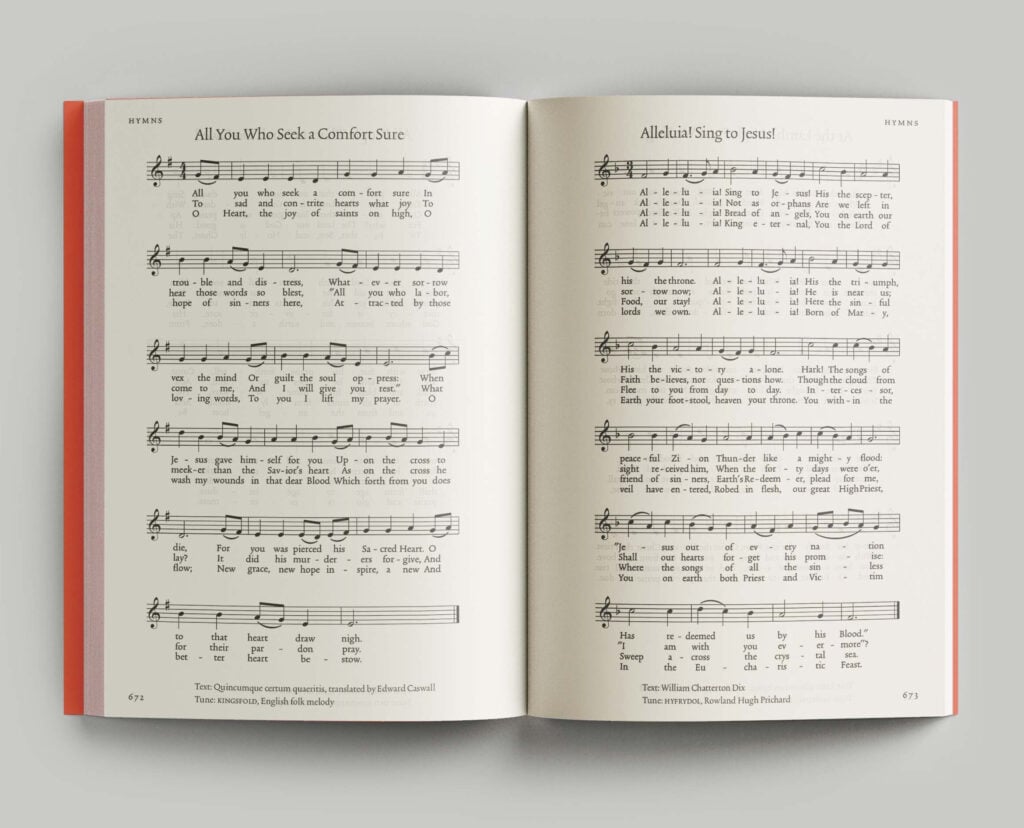
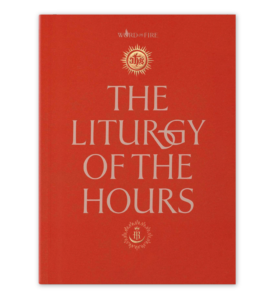
In order to facilitate this common time of prayer, we will have multiple copies of an orange monthly booklet published by Word on Fire that compiles all of the prayers for Evening Prayer (Vespers) into one easy format without needing to figure out multiple pages for the various Psalms, antiphons, and other prayers associated with the Liturgy of the Hours. Sometimes what keeps many from praying the Liturgy of the Hours is that it can be hard to learn how the various texts that change from day to day work. For the first couple weeks, the priests and deacons leading Evening Prayer will also offer some orientation and guidance as well. While we will use these orange booklets in common for Evening Prayer on weekdays, anyone praying in the Magnificat Chapel would be welcome to use them to pray Morning Prayer, Evening Prayer, or Night Prayer on their own during their adoration time, or other spontaneous visits to the parish.
 I’m excited to enrich our parish experience of prayer with Liturgy of the Hours. I have prayed the Liturgy of the Hours daily for more than twenty-five years, and I find the prayers and Psalms so nourishing through all the different experiences of life, interior conversion, and encounters with the living God. The Liturgy of the Hours is a beautiful and inspiring way to use the scriptures to nourish the heart and soul. I have included a couple of selections of texts from the teaching documents of the Church and “Seven Reasons to Pray Liturgy of the Hours” below. If any days of Evening Prayer fit into your weekly schedule, I hope you will also find nourishment in the Liturgy of the Hours.
Fr. Luke Meyer
Pastor
Appendix A – Magisterial Teaching on Liturgy of the Hours for Parishes and Laity
“Pastors of souls should see to it that the chief hours, especially Vespers, are celebrated in common in church on Sundays and the more solemn feasts. The laity, too, are encouraged to recite the divine office, either with the priests, or among themselves, or even individually.” (Second Vatican Council, Sacrosanctum Concilium, §100, 1963)
“In public and common prayer, the celebration of the Liturgy of the Hours is to be preferred to celebrations of the Word or private devotions as long as it is compatible with the situation and pastoral needs.” (General Instruction of the Liturgy of the Hours, §37, 1971)
“In accordance with their individual circumstances, religious communities, laypersons, and especially the laity engaged in apostolic work should steal from their various duties enough time to sanctify the day with the praise of God.” (General Instruction of the Liturgy of the Hours, §29, 1971)
“It is therefore essential that education in prayer should become in some way a key-point of all pastoral planning. I myself have decided to dedicate the forthcoming Wednesday catechesis to reflection upon the Psalms, beginning with the Psalms of Morning Prayer with which the public prayer of the Church invites us to consecrate and direct our day. How helpful it would be if not only in religious communities but also in parishes more were done to ensure an all-pervading climate of prayer. With proper discernment, this would require that popular piety be given its proper place, and that people be educated especially in liturgical prayer. Perhaps it is more thinkable than we usually presume for the average day of a Christian community to combine the many forms of pastoral life and witness in the world with the celebration of the Eucharist and even the recitation of Lauds and Vespers. The experience of many committed Christian groups, also those made up largely of lay people, is proof of this.” (St. John Paul II, Novo Millennio Ineuente, Solemnity of the Epiphany, 2001)
“I would then like to renew to you all the invitation to pray with the Psalms, even becoming accustomed to using the Liturgy of the Hours of the Church, Lauds in the morning, Vespers in the evening, and Compline before retiring.” (Pope Benedict XVI, General Audience on November 16, 2011)
Appendix B – “Seven reasons to pray the Liturgy of the Hours?”[1]
 First, it unites us to Jesus Christ.
The Liturgy of the Hours joins us with Christ in singing an eternal hymn of praise to the Father. As Vatican II taught, “It is the very prayer which Christ Himself, together with His body, addresses to the Father” (Sacrosanctum Concilium, §84). If you want to grow deeper in your relationship with Christ, and you already frequent the sacraments, your next step should be to begin praying the Liturgy of the Hours. Few practices will draw you closer to Jesus.
Second, the Liturgy of the Hours allows you to pray with the Church.
Personal prayer is good and necessary, but when the Church offers praise to God through the Liturgy of the Hours, “it unites itself with that hymn of praise sung throughout all ages in the halls of heaven” (General Instruction on the Liturgy of the Hours, §16). We join not only people from every tribe and tongue, every people and nation, but the entire communion of saints in heaven.
Third, the Liturgy of the Hours is the highest form of prayer after the Mass.
Why? Because the Liturgy of the Hours is not just the private prayer of some Christians, but the unified, sacred prayer of the whole Church, uniting all the faithful, from all vocations, in all countries, into one single prayer to the Father, echoing the very Word of God back to its source. It’s also the supreme way to pray as a family. Pope St. Paul VI affirmed this in Marialis Cultus, calling it “the high point which family prayer can reach” (Paul VI, Marialis Cultus, §54).
Fourth, the Liturgy of the Hours is thoroughly biblical.
“Its readings are drawn from sacred Scripture, God’s words in the Psalms are sung in his presence, and the intercessions, prayers, and hymns are inspired by Scripture and steeped in its spirit” (General Instruction on the Liturgy of the Hours 14). The more you pray the Hours, the more the Bible saturates your mind and heart. You’ll begin noticing yourself memorizing large chunks of Scripture—the Canticles especially, which are repeated each morning and evening—and you’ll find that biblical passages spring to mind during your own quiet, personal prayer. All of this will make your prayer more biblical.
Fifth, the Liturgy of the Hours will mature and deepen the rest of your spiritual life.
After praying the Hours for some time, you will begin to see the world differently. You will develop a renewed spiritual vision, seeing the world as God sees it, more attuned to the dynamics of justice, love, sin, compassion, and forgiveness. You are changed as a consequence. You will also notice your times of personal prayer outside the Liturgy of the Hours becoming more elevated and intense. The Liturgy of the Hours incorporates each major dimension of Christian prayer—worship, thanksgiving, petition, and intercession—and by praying the Hours, you become more proficient in each one.
Sixth, the Liturgy of the Hours allows you to “pray without ceasing.”
Jesus taught about the need to “pray always and not to lose heart” (Luke 18:1), and St. Paul directed us to “pray without ceasing” (1 Thess. 5:17). But for many Christians, these directives seem unrealistic, if not impossible. How can we pray continually, especially when our days are jam-packed with duties and commitments? The Liturgy of the Hours offers a solution, allowing you to lock in times of prayer throughout the day and, more than that, combine your voice with millions of others throughout the world who are also praying the Hours. At every moment, someone somewhere is offering these prayers to God. So, while we might not be able to “pray without ceasing” as individuals, we can do so together as a Church.
Seventh, and finally, the Liturgy of the Hours makes God the center of your day.
When you begin each day with Morning Prayer, close it with Evening Prayer, and offer Night Prayer before bed, you establish three fixed pillars during the day around which the rest of your activities turn. For other people, the main pillars of the day might be breakfast, lunch, and dinner, or perhaps work meetings or other activities. Everything else, including spiritual commitments, fits around those moments. But that changes when you pray the Liturgy of the Hours. Prayer becomes the new hinge of your day, reorienting your mind so that you give highest priority to the things of God.
[1] Taken from Word on Fire at https://www.wordonfire.org/pray/