A Homily on the Vigil of Priestly and Diaconate Ordination
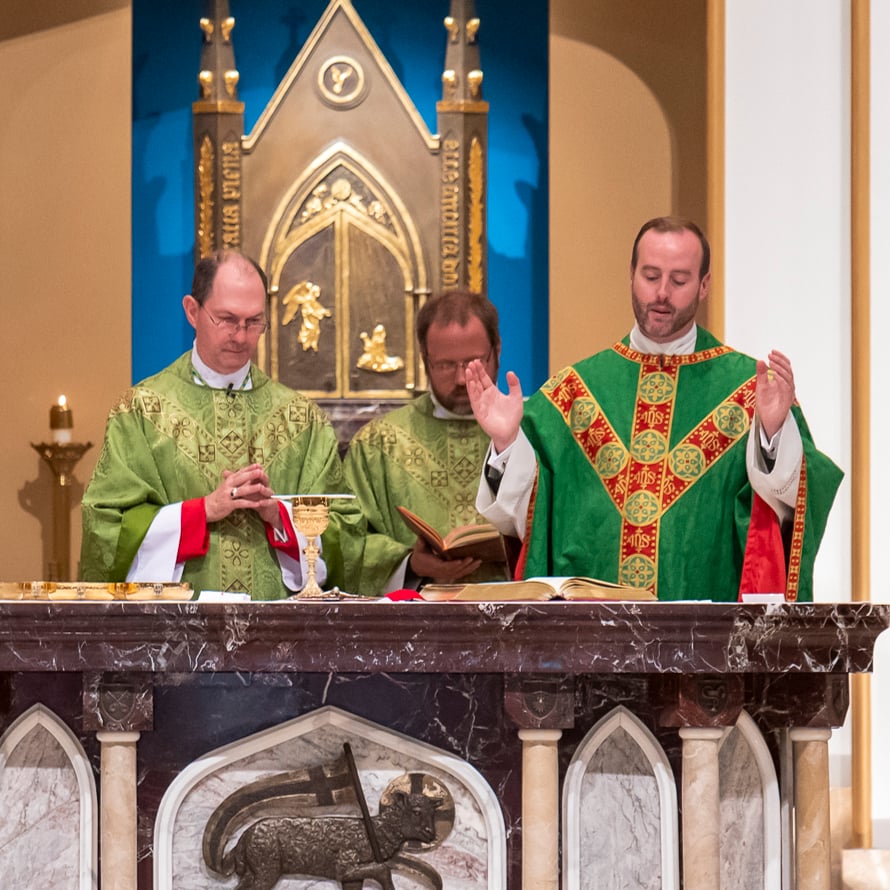
On the evening of June 4, 2026 — the vigil before six men were ordained a deacon and priests for the Diocese of Fargo — I was asked to offer a homily to those men, to Bishop Folda, to brother clergy, and to the parents, families and friends. What follows is that homily, lightly edited for reading with the audio also posted below..
 Introduction
Men, and soon to be my brothers: my desire for you tonight is that you be blessed with a new confidence in bearing the fire — the fire of God’s love as His priests. We heard tonight from St. Peter about the gift of faith, more precious than fire-tried gold (1 Pet 1:7). And this faith has now led you to give your life away in love as a priest.
So I want to meditate for a while on an Old Testament duo who knew the fire of God well: Elijah and Elisha.
The New Elijah
Jesus, especially in the Gospel of Luke — my namesake — is the new Elijah. In Luke 9, He begins what is known as His long journey to Jerusalem, setting His face toward the city. Some of you studied in the American Umbria, in the hills of Emmitsburg, whose shadows are blessed by our own American saints. I was reading Father Gadenz’s commentary[1] this week, so perhaps you know this well. He speaks of Jesus as the new Elijah — Elijah, who had just appeared with Him at the Transfiguration, and who now is surpassed by One greater than himself.
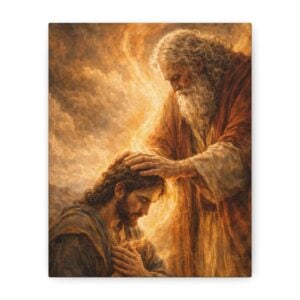
And not only Father Gadenz. Another German theologian, by the name of Joseph Ratzinger[2], also loved this theme of Jesus as the new Elijah. When Elijah commissions Elisha, he is not merely sharing baptismal discipleship — to put it in our own words, not to be anachronistic — but rather commissioning him to an office. Not a call to discipleship in general, but to a new ministry, as Elijah passes his mantle to Elisha to carry out his new work (1 Kgs 19:19–21).
Two Kinds of Fire
Many imagine that the zeal of a seminarian is measured by how hard he cheers when Elijah slays the prophets of Baal and calls down fire upon them (1 Kgs 18). But in the Gospel of Luke, when Jesus travels toward Samaria — a faithless place — the sons of thunder, James and John, want to imitate Elijah and call down fire to destroy it. They come to Him with great zeal and ask, understandably and in good faith, “Lord, can we call down fire upon this place?” (Lk 9:54).
And Jesus, the new Elijah, chooses not to annihilate the people of Samaria. He channels that zeal toward a new place — one that would not really come about until after His resurrection. After the deacon Stephen is martyred in the Acts of the Apostles, Philip the deacon goes to Samaria and preaches the gospel. The people hear the word and respond, and news comes back to Jerusalem that Samaria has come to faith (Acts 8). John returns — this time with Peter — not to call down the fire of Elijah, but to call down the fire of the Holy Spirit, stirring it into flame and offering the gift of confirmation to these once-faithless Samaritans.
This is the new fire, the fire of the new covenant. It is little power to be able to annihilate; that is easily done. But now they share a real power — the power to build up, to give life, to open the human heart, and to transform. This is the fire that renews. And this is the fire that you, too, will share as His priests.
Hand to the Plow
When Elijah calls Elisha, his hand is at the plow. Jesus refers to this very scene with His own disciples: “No one who puts his hand to the plow and looks back is fit for the kingdom of God” (Lk 9:62) — the very words Elijah gave to Elisha when he called him to follow.
What do we leave behind in our ordination, as we lay ourselves down upon the altar stones of the cathedral? Ultimately, we leave behind ourselves — our plans, our prerogatives, our ego. We do not create or curate our own ministry. We are not lone rangers or mavericks who now simply have a stronger platform for our ideas, our opinions, our preferences. Rather, we put our hand to the plow and do not look back. We leave ourselves behind, and we find the courage and confidence to enter the fire — to say yes to another’s will, to say yes to His will. Not just once, but as a beginning: the daily, the hourly yes. Thy will be done. Thy will be done.
There is something curious about love — our love of God and His love of us. Love unites; that is one of its great fruits. Love unites the lover and the beloved. But when union happens, we change. We become like Him. We leave ourselves behind. And there is a part of us that can be afraid of losing the freedom to create ourselves. But do not look back. Only look forward. Enter the fire. That fire of His love unites Him to you and you to Him — and what a beautiful union that is.
 Come Close to the Fire
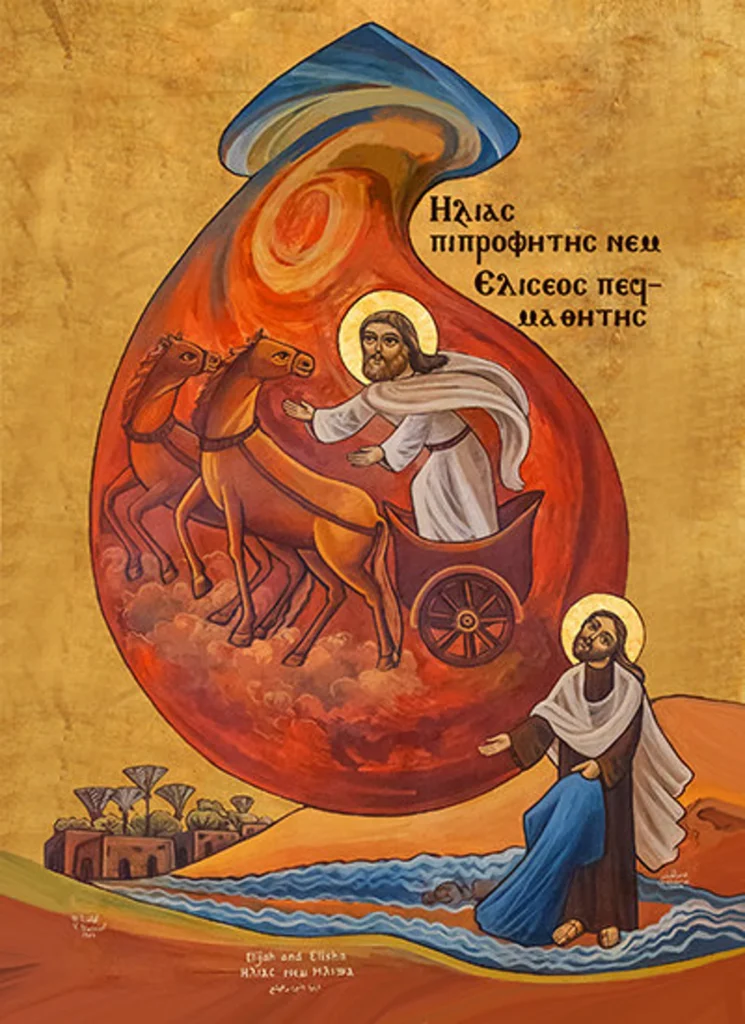
That brings me to the last moment of Elijah and Elisha that might shed light on our priestly lives — the great moment of commissioning at the end of Elijah’s life. Elisha asks for a double portion of his spirit. And Elijah tells him, in effect: come close, if you can be near the fire (2 Kgs 2:9–10).
We come near to Jesus, who is even more of a fire, more of a dynamism of love — the fire He came to cast upon the earth, that it might be kindled (Lk 12:49). Origen, in this age of his rehabilitation, hands on a hidden word of Jesus, popular in his day, found not in the Scriptures but in the tradition: “Who is near me is near the fire.”
Do not shrink back. Do not be afraid of the fire. Come, and become one of those who burn — who burn with this great love. Come with confidence, not with fear, to this transforming power of God’s love, which will transform you into His very presence: the presence of the fire on earth. Be not afraid. With great confidence and great courage, place yourselves into His hands and His heart, which burns so much for you, for me, and for the whole world.
[1]Pablo T. Gadenz, The Gospel of Luke, Catholic Commentary on Sacred Scripture (Grand Rapids, MI: Baker Academic, 2018).
[2]Joseph Ratzinger (Pope Benedict XVI), Ministers of Your Joy (Providence, RI: Cluny Media, 2023).